

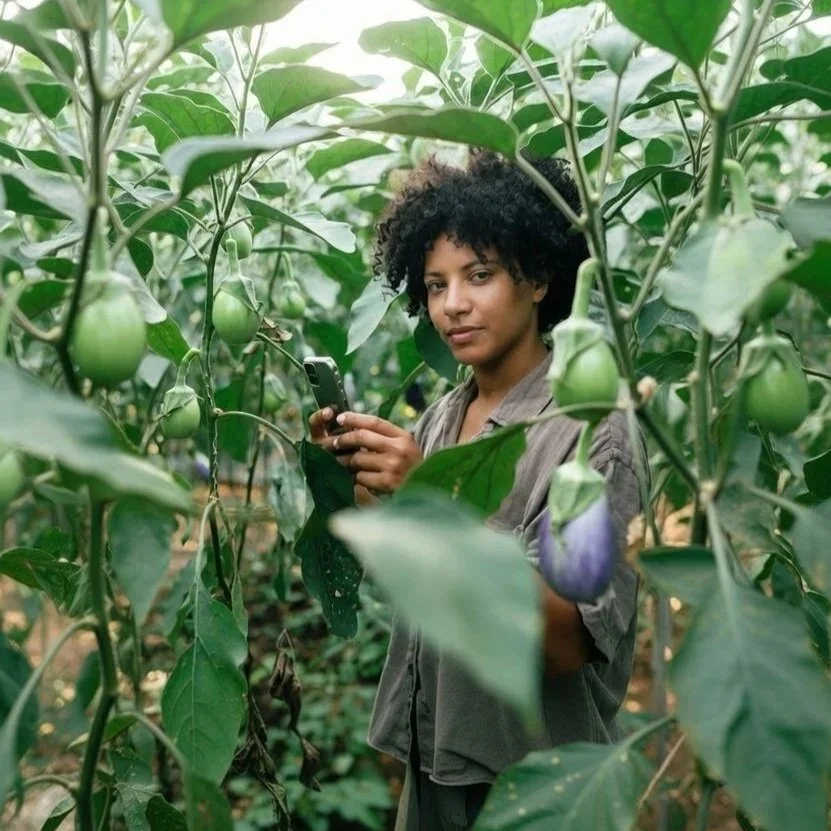
The Citizen Science Network turns local observations into shared agricultural intelligence. Communities collect data, shape insights, and strengthen resilience where it matters most.
The Citizen Science Network
The Citizen Science Network is the human foundation of CSAP.
It brings together farmers, youth, students, extension officers, and community members who voluntarily contribute simple agricultural and environmental observations from their own farms and communities.
Participants are trained to collect geo-referenced, time-stamped data on crop health, pests, soil conditions, weather stress, and environmental change using guided protocols. These observations help transform local knowledge into shared intelligence that supports better decisions in the same communities where the data originates.
This is not a one-way data pipeline. The network functions as a learning community where participants help shape what data is collected, receive feedback and alerts, and see how their contributions influence action on the ground.
-
1. Observe
Farmers and community members record what they see in real conditions: pest symptoms, crop stress, rainfall impacts, soil moisture, and other indicators that affect productivity and resilience.
2. Share
Observations are submitted through simple digital tools designed for low-connectivity environments. Most contributions use smartphones and guided prompts such as photos, checklists, and location stamps.
3. Learn
Individual observations are combined, validated, and interpreted alongside other data sources. Participants receive feedback, summaries, and alerts that show emerging patterns beyond any single farm.
4. Act
Insights generated from the network support earlier responses to risks, improved farm-level decisions, and stronger coordination among farmers, advisors, and institutions.
-
Farmers- Farmers contribute field-level observations and receive localized insights that help reduce crop losses, manage pests, and adapt to changing climate conditions.
Youth and Students - Young people participate as data collectors and learners, gaining hands-on experience in digital agriculture, environmental monitoring, and practical science that connects technology with real-world challenges
Extension Officers and Researchers - Advisors and researchers use network data to strengthen surveillance, prioritize interventions, and ensure research is informed by real farm and landscape conditions.
Environmental Stewards - Community members and conservation practitioners contribute observations on ecosystems, biodiversity, and landscape health. Their participation supports Nature-Based Solutions by linking environmental conditions with agricultural resilience and community well-being.
-
The Citizen Science Network focuses on practical, observable information, including:
Pest and disease presence
Crop health and growth stages
Soil moisture and visible soil conditions
Rainfall, flooding, and dry-period stress
Environmental conditions affecting farms and landscapes
Data collection is designed to be realistic and low-burden, ensuring participation remains accessible and sustained
-
All contributions are managed under clear data-use and ethical guidelines. Data is anonymized and aggregated before analysis, and participants provide informed consent through transparent processes.
The network prioritizes fair benefit sharing, ensuring contributors receive value through insights, alerts, learning opportunities, and community outcomes, not just data extraction.
Why the Citizen Science Network Matters
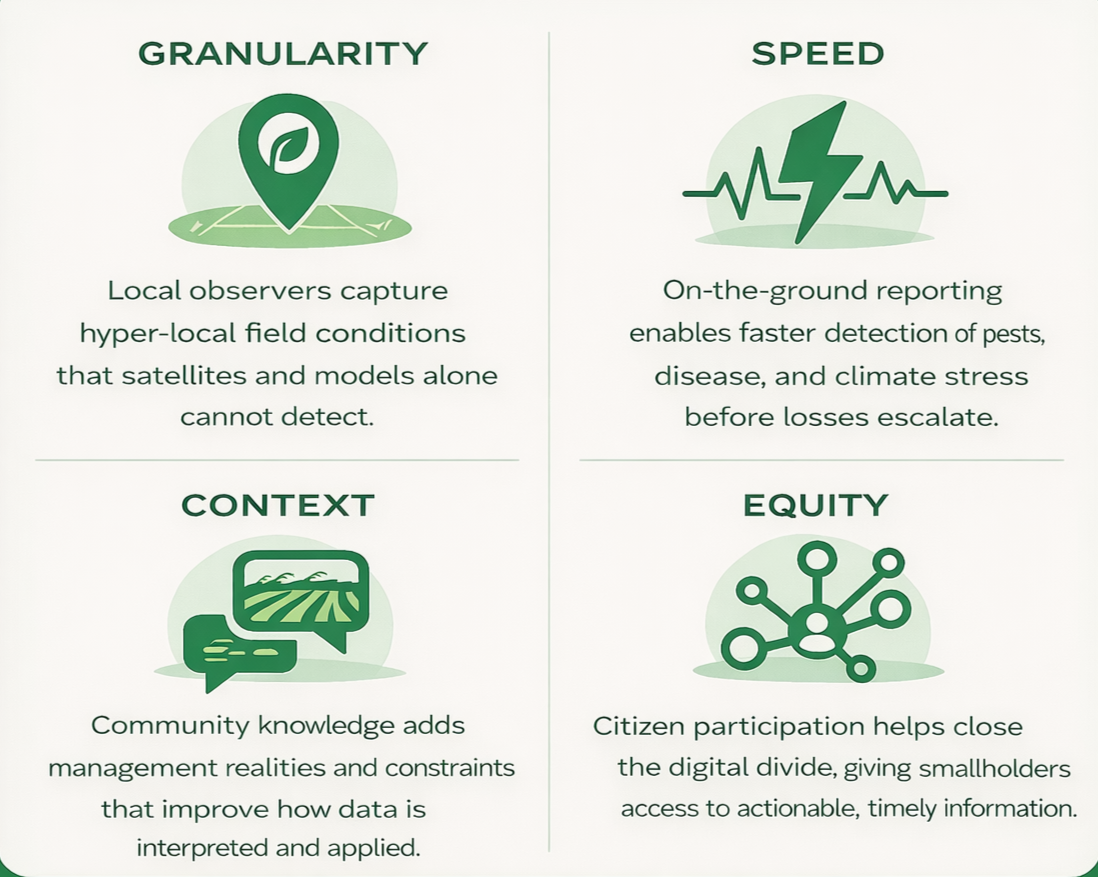
Citizen science strengthens agricultural decisions by combining human observation with digital tools
Join the Citizen Science Network
The Citizen Science Network invites people to be part of a shared journey to improve agricultural resilience through collaboration, learning, and local action.
By contributing observations from their own communities, participants become active partners in building agricultural intelligence that serves farmers, ecosystems, and food systems alike.
Join the Network
Learn How the Data Is Used